Complete Engineering Guide to Inline ERW Weld Seam Eddy Current Testing (ASTM E309 & EN ISO 10893-2)
How to achieve 0 PPM weld-defect escapes above 120 m/min by combining differential segment coils, DC magnetic saturation, phase-angle gating, and traceable calibration standards.
Key Takeaways (TL;DR)
- Use differential segment coils to boost ERW weld-seam SNR by 6–10 dB over encircling coils alone.
- Apply water-cooled DC magnetic saturation on carbon steel mills to suppress HAZ permeability noise and stabilize wall penetration.
- Verify dynamic alarm triggering against ASTM E309 / EN ISO 10893-2 drilled-hole and EDM-notch reference tubes at full line speed.
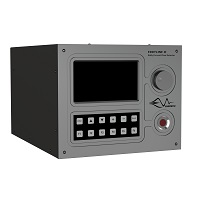
- Synchronize EddyLine II defect gates with mill encoders, spray markers, and MES batch certificates for zero-escape traceability.
Why ERW Weld Seams Demand Dedicated Eddy Current Engineering
Electric Resistance Welded (ERW) carbon and stainless steel pipes face intense mechanical and thermal stresses right through the heat-affected zone (HAZ). While periodic hydrostatic testing samples only a fraction of production after cooling, 100% inline eddy current testing catches pinholes, open welds, hook cracks, and incomplete fusion in real time right on the tube mill.
Understanding Ferromagnetic Permeability Noise
Carbon steel pipes exhibit sharp localized magnetic permeability variations along the weld line caused by rapid induction heating, upsetting, and seam annealing. Without controlled magnetic saturation, this background permeability noise easily masks genuine sub-millimeter weld flaws and forces operators to raise alarm thresholds dangerously high.
Segment Coils vs. Encircling Coils on Welded Pipe Mills
Choosing the right coil architecture directly determines your signal-to-noise ratio (SNR) and false-reject rate:
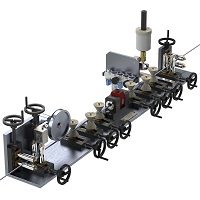
- Differential Segment Coils: Focus the electromagnetic field exclusively across a 30°–60° arc centered on the weld seam, boosting sensitivity to small pinholes and short weld-line cracks by up to 6–10 dB compared to full-circumference coils.
- Full Encircling Coils: Provide 360° surface coverage of both base strip and weld zone simultaneously, ideal when strip laps, roll marks, and parent-metal slivers must also be screened.
Integrating Water-Cooled DC Magnetic Saturation
Driving the ferromagnetic pipe wall close to magnetic saturation suppresses relative permeability toward unity (μr → 1), stabilizing eddy current penetration depth across the entire wall thickness. Pairing a water-cooled DC saturation yoke with EddyLine II digital phase rotation cleanly separates true OD/ID weld defects from tube vibration and seam-twist drift.
Calibration Standards & Compliance (ASTM E309 / EN ISO 10893-2)
International standards require dynamic verification using a reference pipe containing precision-machined artificial discontinuities:
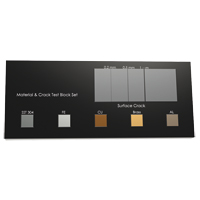
- Drilled Through-Holes (TDH): Typically 1.0 mm to 3.2 mm diameter depending on pipe OD and acceptance level (E1–E4 under EN ISO 10893-2).
- EDM Longitudinal Notches: Verify sensitivity to narrow linear weld cracks and incomplete fusion along the fusion line.
Dynamic Speed Verification & MES Traceability
Always verify alarm triggering at normal production mill speed rather than static hand passes alone. Connecting EddyLine II via PLC/encoder tracking and OPC-UA ensures every flagged defect is paint-marked within ±15 mm and automatically logged to your plant MES quality certificate.
Frequently asked questions
Eng. Arman Yilmaz
Principal NDT Systems Engineer (ISO 9712 ET Level III)Principal Eddy Current & Automated NDE Systems Engineer at EDDYWISE with 14+ years commissioning high-speed ERW tube mills, bar/wire inspection lines, and multi-frequency metallurgical sorting cells across Europe and MENA.
LinkedIn Profile